

The all- electric melting technology for glass has garnered significant industry attention due to its advantages in energy utilization, environmental protection, and product quality. This article elaborates on the development history, working principles, and structural characteristics of all- electric glass furnaces, analyzes their superior performance over traditional glass furnaces in terms of energy efficiency, product quality, and environmental friendliness, and reviews their application in container glass production. Additionally, it discusses the challenges encountered during the implementation of all- electric glass furnaces in bottle glass manufacturing as well as corresponding mitigation measures, thereby providing valuable insights for the industry to adopt this technology more effectively.
Container glass is widely used in industries such as food, beverage, and pharmaceuticals, making it a crucial material in the packaging sector. The advancement of its production technology is essential for improving quality, reducing costs, and enhancing production efficiency. The glass furnace is the core equipment in container glass manufacturing. All-electric glass melting technology is an advanced process that utilizes electrical energy as the heat source to achieve glass melting. Compared to traditional flame melting technology, it offers advantages such as high energy utilization efficiency, low environmental pollution, and superior glass melt quality. Traditional glass furnaces have certain limitations in terms of energy consumption and environmental impact. As a new glass furnace technology, the all-electric glass melting furnace presents novel opportunities and transformative potential for container glass production.
The development of the all-electric glass melting furnace has undergone a long evolution. In 1902, Volkmann obtained relevant patents, initiating the exploration of glass electric melting technology. Subsequently, early practical work and improvements were carried out by Reid in Norway and Cornelius in Sweden, among others. During World War II, Swiss researcher Pohl conducted extensive research on electric melting to address fuel shortages. The application of aluminum electrodes after the war promoted the commercialization of electric melting technology. In 1964, rod-shaped tin oxide electrodes were introduced into industrial application, laying the foundation for electric melting of lead glass. Over the past two decades, glass electric melting technology has rapidly proliferated. The concept of "mixed melting" (electric boosting) has gained attention, and technologies such as electrically heated forehearths and mini electric melters have also developed. All-electric glass furnace technology continues to improve, and its application scope continues to expand.
Currently, the global all-electric glass furnace industry shows a steady growth trend. The "2024–2030 Global All-Electric Glass Furnace Industry Research and Trend Analysis Report" indicates that from 2019 to 2023, the global market size for all-electric glass furnaces increased year by year, with a compound annual growth rate (CAGR) of approximately 5%. In the global all-electric glass furnace market, China is the largest producer, holding a market share exceeding 40%. Simultaneously, China is also one of the major consuming countries. China has been continuously developing in the research, design, and construction of all-electric glass furnaces. However, as an evolving technology, all-electric glass melting still faces a series of practical problems that require serious research and resolution.
1. Working Principle of the All-Electric Glass Melting Furnace
2. Advantages of All-Electric Glass Melting Furnaces in Container Glass Production
3. Application of All-Electric Glass Furnaces in Opal Glass Production
4. How to Select Refractories for All-Electric Glass Melting Furnaces
5. Problems and Countermeasures in the Application of All-Electric Glass Furnaces in Container Glass Production
6. Conclusion
1. Working Principle of the All-Electric Glass Melting Furnace
The all-electric glass melting furnace operates based on the principle of joule heating (electric melting). By arranging special electrode structures inside the glass furnace, an alternating electric field is generated within the glass melt when alternating current passes through the electrodes. The glass melt possesses a certain degree of electrical conductivity. Under the influence of the alternating electric field, internal ions undergo directional movement and mutual friction, thereby generating joule heat, which achieves the heating and melting of the glass. This heating method is fundamentally different from traditional flame heating, enabling precise heating control of the glass melt.
The high-temperature melting of glass batch in an all-electric glass furnace relies on ionic conduction for heat generation. Monovalent metal ions such as potassium and sodium in the glass composition contribute to conductivity. Its conduction mechanism differs from metallic conduction. A key characteristic is that its electrical conductivity increases with rising melt temperature. The relationship between electrical resistance and melt temperature has the following features:
- All glass compositions exhibit a negative temperature coefficient of resistance (NTCR) in the molten state.
- Due to differences in glass composition, the resistivity of molten glass varies significantly, and the slope of its change with temperature also differs.
Glass is an insulator at low temperatures. In the high-temperature molten state, it becomes conductive due to the presence of alkali metal ions like sodium and potassium. By positioning electrodes at different locations within the furnace, electric current passes through the glass bath, utilizing the joule heating effect to generate heat. This facilitates the transformation of the glass batch into a liquid state. The entire melting process can be controlled by regulating the input electrical power to manage the melting temperature.
2. Advantages of All-Electric Glass Melting Furnaces in Container Glass Production
2.1 Structural Characteristics
- The electrode system is intricately designed, requiring special materials resistant to high temperatures and corrosion. The arrangement of electrodes is optimized to ensure a uniform distribution of the electric field within the glass melt, guaranteeing even heating of the glass bath.
- Excellent thermal insulation is achieved through the use of high-performance insulating materials, effectively reducing heat loss from the glass furnace surface.
- Advanced automation control allows for real-time monitoring and adjustment of key parameters such as temperature and electric field strength within the glass furnace. This enables precise control, ensuring the glass melt is melted and formed under optimal process conditions, thereby enhancing product quality stability.
2.2 Energy Efficiency
Traditional flame glass furnaces heat via the flame on the surface, with a significant amount of heat carried away by exhaust gases, resulting in low thermal efficiency. In contrast, heat in an all-electric glass furnace is generated directly within the glass bath. The space above the glass melt level operates as a "cold top" structure, with temperatures below 150°C. Energy is primarily consumed in the glass melting process and through glass furnace wall heat loss, with no heat loss from flue gases. Since heat acts directly on the glass melt, energy utilization efficiency is greatly improved. Thermal efficiency can be 30% to 60% higher compared to traditional flame glass furnaces.
2.3 Environmental Cleanliness
The all-electric melting process involves no combustion, thereby producing no pollutants such as nitrogen oxides (NOx), sulfur oxides (SOx), or particulate matter. This reduces emissions of "industrial waste gases, wastewater, and residues," improving the production environment. Especially in the production of opal glass, the volatilization of fluorides can be reduced from 30%-50% in traditional flame glass furnaces to 5%-8%. This significantly diminishes fluoride pollution of the environment and helps production enterprises reduce pollution control costs.
2.4 High Product Quality
Using an all-electric glass furnace can reduce coloration issues in the glass melt caused by fuel combustion products. Due to the uniform distribution of the electric field within the melt, all parts of the glass are heated evenly, reducing temperature gradients. This helps to lower internal stresses within the glass, improving optical homogeneity and consistency of physical properties. At different production stages, heating power can be adjusted quickly and accurately, avoiding production instability due to temperature fluctuations and reducing defects such as bubbles and stones. Container glass produced by all-electric glass furnaces exhibits high transparency, good strength, high product qualification rates, and high yields of premium-quality products. It can meet the demands of high-end packaging, such as producing high-transparency liquor bottles and premium cosmetic bottles, where product quality advantages are evident.
2.5 Small Footprint
The all-electric glass melting furnace has a simple glass furnace structure, employing vertical melting. Its melting tank is deeper compared to traditional flame furnaces. It does not require large combustion systems, waste heat recovery systems, or flue gas environmental protection systems, leading to a significant reduction in floor space.
3. Application of All-Electric Glass Furnaces in Opal Glass Production
3.1 Development and Application of Opal Glass Furnaces
Opal glass is formed by introducing fluorides such as sodium fluorosilicate or fluorite, which create an opacifying effect. During forming, the glass gradually becomes opaque and acquires its milky white characteristics. Since fluorides are highly volatile in flame furnaces, the volatilized components not only affect glass quality and cause raw material loss but also severely pollute the environment. Using an all-electric glass furnace to produce opal glass can reduce pollution and improve environmental benefits.
3.2 Glass Furnace Structure
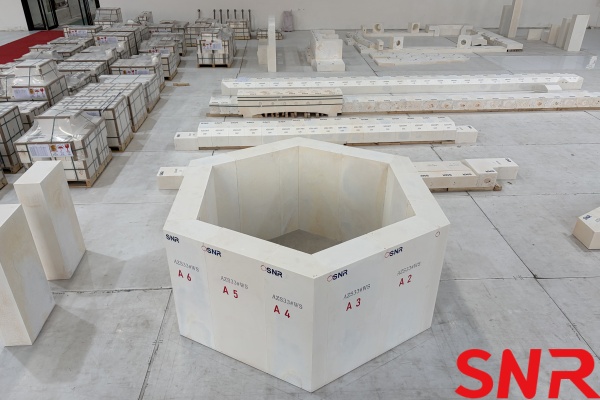
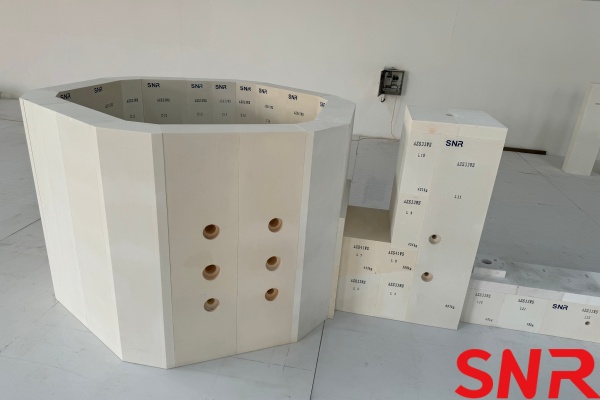
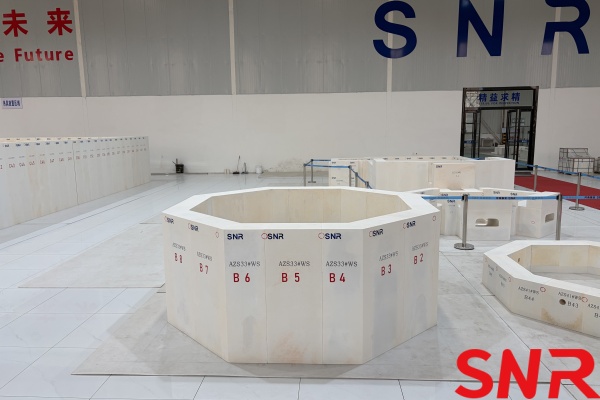
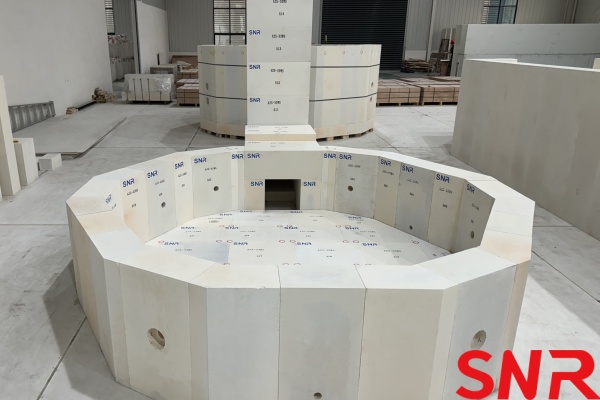
The all-electric glass melting furnace is designed based on glass type, production scale, process requirements, and site conditions. Common glass furnace body shapes include rectangular, hexagonal, or polygonal. Hexagonal or polygonal glass furnace structures are more complex and costly, but they can reduce surface heat loss from the glass furnace body. They have smaller dead zones during glass melting, facilitating uniform melting and are also conducive to symmetrical electrode arrangement for achieving three-phase balanced power supply. Therefore, designing hexagonal or polygonal structures offers significant advantages.
The crown (arch) structure and charging method of an all-electric glass furnace differ from those of traditional flame glass furnaces. The batch must be spread evenly in a thin layer from top to bottom on the glass surface, known as the batch blanket. A moving belt charger is typically used to charge the batch uniformly across the glass furnace plane. The glass furnace crown can be a flat arch.
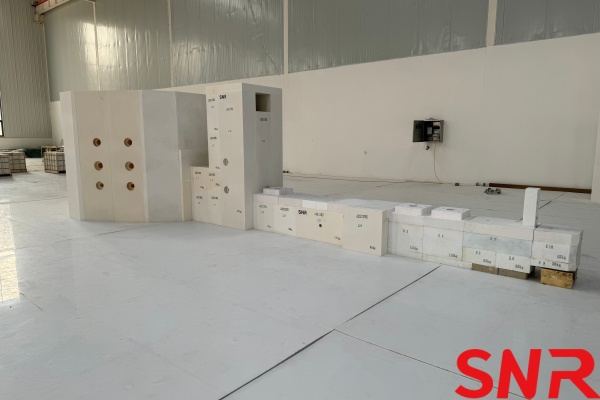
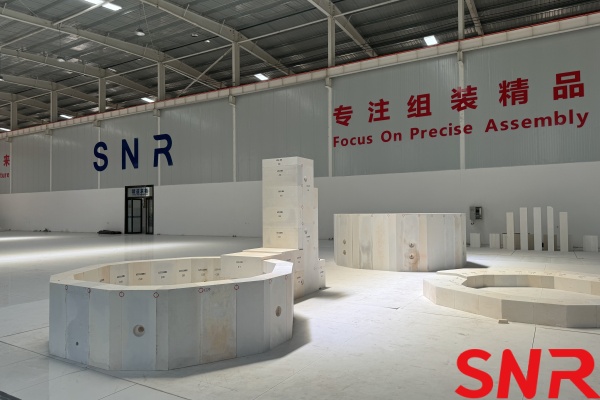
The selection of refractory materials for an all-electric glass furnace should focus on the crown and sidewalls. (1) During glass furnace heat-up (firing), flame heating is used to reach the high temperatures required for glass melting, while during normal operation, the crown space temperature needs to drop below 150°C. Therefore, the crown refractories must possess excellent thermal shock resistance. (2) Because horizontal electrode insertion requires drilling holes in the refractory blocks, temperatures near the electrodes are relatively high. Opal glass has a high fluorine content, which is highly corrosive to the glass furnace sidewalls. Furthermore, the convection flow velocity of the glass melt induced by the electrodes is several times greater than that inside traditional flame glass furnaces, causing extremely rapid erosion of refractories near the electrodes. Therefore, sidewall refractories must have excellent high-temperature resistance and erosion resistance. Consequently, sidewall refractories should be selected from high-zirconia AZS blocks.
3.3 Electrode Arrangement
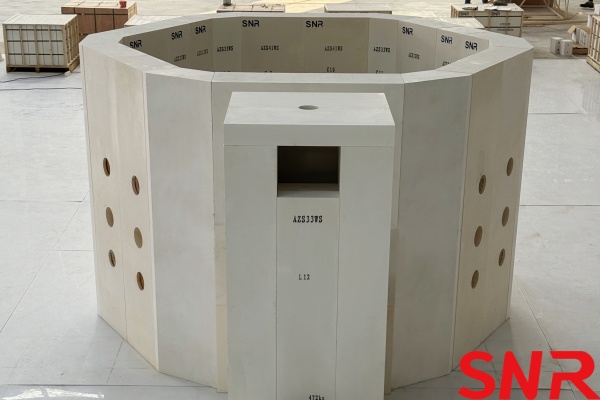
Electrodes in the melting section provide energy for glass melting. They are typically evenly distributed around the glass furnace, inserted horizontally in three layers, representing a horizontal insertion method. The electrode power must be set appropriately to ensure the glass furnace maintains a cold top state during glass melting and meets the requirements for deep vertical melting. Electrodes in other parts of the glass furnace are arranged according to process requirements, primarily using horizontal insertion.
In recent years, molybdenum electrodes have seen widespread application and development in glass electric melting technology. Their production process involves: molybdenum powder → pressing → sintering → pressure processing → inspection and delivery. For a long time, molybdenum electrodes in glass electric melters have mostly been arranged using "horizontal insertion" and "bottom insertion" methods. Horizontally arranged molybdenum electrodes are highly susceptible to bending stress from their own weight, limiting their insertion depth. Exceeding a certain length increases the risk of breakage. While using a "bottom insertion" method for molybdenum electrodes offers advantages such as high melting efficiency and the possibility of continuous advancement, improper design, installation, or use of the water cooling jacket (to prevent oxidation) can easily lead to corrosion of the bottom blocks. In severe cases, there is a risk of glass leakage. Therefore, neither the "horizontal insertion" nor the "bottom insertion" method provides an ideal temperature field for the melter. However, employing a "top insertion" method for molybdenum electrodes allows for adjustment of the energy distribution inside the glass furnace by modifying the installation position and electrode shape, creating favorable conditions for glass melting. It also offers significant advantages such as ease of replacement, convenient installation and maintenance, and extended glass furnace life. Currently, "top insertion" electrodes are becoming a trend for future development.
4. How to Select Refractories for All-Electric Glass Melting Furnaces
As an efficient and environmentally friendly melting device in the modern glass industry, the performance and service life of an all-electric glass melting furnace largely depend on the rational selection and application of refractory materials. Compared to traditional flame glass furnaces, all-electric glass furnaces have unique operating conditions: the heat source comes from joule heating within the glass bath; cold top operation results in low upper space temperatures; while local thermal load and chemical erosion near electrodes are extremely severe, and glass melt convection intensity is significantly higher than in flame glass furnaces. These characteristics impose more stringent requirements on refractories. Therefore, the scientific and systematic selection of refractories is a core aspect of the design, construction, and maintenance of all-electric glass furnaces, directly impacting melting quality, energy consumption levels, operational safety, and economic benefits.
4.1 Operating Conditions of All-Electric Glass Furnaces and Their Requirements for Refractories
The selection of refractories for all-electric glass furnaces must be based on a profound understanding of the unique physicochemical environment inside the glass furnace.
Unique Temperature Distribution and Thermal Stress: All-electric glass furnaces employ "cold top" technology. Below the batch blanket is high-temperature molten glass (typically 1400-1600°C), while the space above the blanket can be below 150°C. This massive vertical temperature gradient, especially for crown materials at the interface, necessitates withstanding frequent thermal shocks. Thermal shock resistance becomes the primary evaluation criterion. The glass furnace heating-up (firing) and shutdown maintenance processes present even more severe tests for the thermal shock resistance of refractories.
Intense Electrochemical Erosion and Scouring: Electric current injected into the glass bath through electrodes creates areas of high temperature and high energy density near the electrodes. The migration of alkali metal ions (Na⁺, K⁺) in the glass melt is intensified under the electric field, enhancing their ability to penetrate and react with refractories. Simultaneously, the convection flow velocity of the glass melt driven by joule heating is very rapid, causing intense mechanical scouring of the sidewalls, particularly in electrode insertion areas. If producing special glasses containing fluorine (e.g., opal glass), boron, or high alkali content, the chemical activity of the erosive medium is even stronger. Therefore, refractories are required to possess extremely high erosion resistance, low exudation tendency, and good high-temperature structural strength.
Special Challenges Posed by Electrode Arrangement: Electrodes (especially horizontally inserted molybdenum electrodes) must pass through the sidewall refractory blocks. The refractory material around the electrode holes is not only at the forefront of erosion and scouring but may also suffer local damage due to electrode oxidation or glass leakage, potentially threatening the safety of the entire glass furnace. The selection of materials and the design of the sealing structure at these points are crucial.

4.2 Selection Criteria and Practice for Refractories in Key Areas
According to the function and failure mechanisms of different parts of an all-electric glass furnace, refractories with matching characteristics should be selected.
4.2.1 Melting Tank Sidewalls
The sidewalls, especially near the glass level and electrode insertion zones, are the most severely eroded areas in the glass furnace. Oxidized, no-shrinkage porosity fused cast AZS blocks (ZrO₂ content 33%-41%) are currently the standard configuration for all-electric glass furnace sidewalls. Their advantages include:
♦ High zirconia content provides excellent erosion resistance: ZrO₂ has very low solubility in glass melt, effectively blocking the erosion front.
♦ No-shrinkage porosity structure: Overcomes local weaknesses caused by shrinkage cavities in traditional fused cast AZS blocks, resulting in a more uniform structure and longer overall service life.
♦ Low/No exudation characteristics: Minimal glassy phase exudation at high temperatures, avoiding the formation of stones or cords from exudate contaminating the glass melt.
For ordinary soda-lime glass, fused cast AZS blocks with ZrO₂ content of 33%-36% (e.g., ER 1681, 1711 grades) are selected. For more erosive glasses like borosilicate, opal glass, or high-frequency electrode zones, premium fused cast AZS blocks with ZrO₂ content ≥41% (e.g., ER 1711, or even higher-grade 41# blocks) should be used.
High-Performance Alternative: α-β Alumina Fused Cast Blocks
For extremely erosive glasses, such as certain electronic glasses or high-fluorine opal glass, α-β alumina blocks are a superior choice. Their main crystalline phases are α-Al₂O₃ and β-Al₂O₃, containing almost no glassy phase, thus possessing unparalleled erosion resistance, especially far exceeding fused cast AZS blocks in resisting fluorides and highly alkaline glass melts. The disadvantages are higher thermal conductivity, requiring more precise insulation design, and higher cost. They are typically used for electrode blocks, glass level lines, and other most demanding areas.
4.2.2 Melting Tank Bottom
The bottom withstands the hydrostatic pressure of the glass bath and experiences relatively lighter erosion, but insulation and structural stability must be considered. A multi-layer composite structure is commonly used:
♦ Upper contact layer: Typically uses AZS ramming mix (for leveling and sealing on top of insulation bricks) or directly lays a layer of fused cast AZS paving blocks.
♦ Main structural layer: Uses dense zircon bricks or high-quality sintered AZS bricks to provide main structural support and certain erosion resistance.
♦ Insulation layer: Lower layers use lightweight insulation bricks, alumina hollow sphere bricks, etc., to effectively reduce downward heat loss.
If "bottom insertion" electrodes are used, the bottom bricks around the electrodes must be of the same grade or even better than the sidewalls, using no-shrinkage, high-zirconia fused cast AZS blocks, accompanied by precise cooling and sealing systems.
4.2.3 Crown and Upper Structure
The crown is in a "fire-and-ice" environment; the core requirements are thermal shock resistance and sealing. The traditional preferred choice is high-quality silica brick. High-purity silica brick (SiO₂ > 96%) has the advantages of good volume stability at high temperatures (above 600°C), good thermal shock resistance, and moderate cost, making it the choice for many all-electric glass furnace crowns. However, its refractoriness under load is relatively low, and its resistance to alkali vapor is limited.
4.2.4 Electrode Blocks and Electrode Sealing
Electrode penetration blocks are one of the weakest links in the glass furnace and must be specially designed. The electrode block material must be of equal or superior quality to the adjacent sidewall material, such as fused cast AZS 41#WS block or α-β alumina block. Precise machining is required to ensure minimal clearance between the block and the electrode.
The sealing and cooling system employs multi-stage composite sealing, typically including an inner glass seal layer, an intermediate high-temperature fiber gasket/ring, and an outer water-cooling jacket or air-cooling system. The water-cooling jacket design must be precise, ensuring effective cooling to prevent oxidation of the electrode and block while avoiding local overcooling that could cause glass melt solidification.
4.2.5 Insulation Materials
Good insulation is a prerequisite for realizing the high-efficiency and energy-saving advantages of all-electric glass furnaces. Back-up insulation: Behind the main refractory blocks of the sidewalls and bottom, multi-layer composite insulation structures using lightweight fireclay bricks, alumina hollow sphere bricks, ceramic fiber boards, etc., are employed. The insulation layer must be kept dry, and the hot face temperature of the main refractories must be ensured to be above the solidification point of the glass melt to prevent glass penetration and solidification. Detailed thermodynamic calculations are required in the design.
4.3 Comprehensive Considerations in Selecting Refractories
In practical engineering, refractory selection is far from a simple performance comparison but a multi-objective optimization decision-making process.
♦ Glass Composition and Erosiveness: This is the most fundamental starting point. Refractories with matching erosion resistance must be selected based on the specific chemical composition of the glass being melted.
♦ Glass Furnace Design and Expected Lifetime: For large, high-capacity glass furnaces with long design lives (e.g., 10-15 years), priority should be given to selecting the highest grade refractories to reduce long-term operational risks and cost per ton of glass.
♦ Cost-Benefit Analysis: Under budget constraints, initial investment must be weighed against long-term benefits. Although high-performance materials are expensive, they can reduce glass furnace repair shutdowns, improve glass quality, and lower energy consumption, potentially resulting in lower total lifecycle costs. A strategy of "using premium materials in key areas and economical materials in secondary areas" can be adopted.
♦ Supplier Technical Capability and Service Quality: It is crucial to select a supplier with extensive experience in fully electric glass melting furnaces, capable of providing integrated solutions ranging from materials and design to installation guidance. High-quality after-sales service and technical support are essential for effectively addressing operational issues. As a company with 30 years of dedicated research in the refractory materials field, SNR leverages its profound technical expertise and rich practical experience to offer customers high-quality, long-lasting refractory block products, along with comprehensive support from design consultation to installation guidance. We are committed to delivering reliable products and professional services, ensuring robust support for glass furnace stability and energy efficiency enhancement.
♦ Sustainability and Environmental Protection: Considering the recyclability of refractories and the energy consumption and environmental impact during their production is gradually becoming a new industry trend.
5.1 Electrode Lifetime Issues
Electrode materials for all-electric glass melting must meet multiple requirements:
♦ Possess good electrical conductivity.
♦ Must have excellent high-temperature resistance and corrosion resistance.
♦ The electrode material must not contaminate the glass melt.
Currently, there are relatively few types of electrode materials that meet all these comprehensive requirements. High-performance electrode materials are costly, while lower-cost materials cannot meet the requirements for long-term stable operation, forcing enterprises to make balanced considerations when selecting electrode materials.
During the all-electric melting process, electrodes are in a high-temperature, strong electric field, and erosive glass melt environment. Chemical components in the glass melt, such as alkali metal oxides, can react with the electrode material, leading to electrode corrosion, especially aggravated by fluoride corrosion in opal glass production. Simultaneously, volatilization and wear of the electrode material itself at high temperatures are also relatively severe. For example, in glass melts with high alkali content, electrodes primarily composed of molybdenum undergo oxidation and sulfidation reactions on their surface, forming a loose corrosion layer, which reduces electrode performance and shortens its service life. Frequent electrode replacement in production not only increases costs, including material and labor, but also leads to production interruptions, affecting efficiency and increasing the defect rate of glass products. Therefore, continued research and development of new electrode materials is needed to improve high-temperature and corrosion resistance. Further optimization of electrode structure and installation methods, reducing the contact area between the electrode and the glass melt, lowering erosion rates, and extending electrode replacement cycles are essential.
5.2 Electrode Arrangement Issues
The electrode arrangement directly affects the electric field distribution within the glass melt. Unreasonable arrangements can lead to an uneven electric field, causing uneven heating of the glass melt. For example, electrode spacing that is too large or too small, or improper electrode shape design, can cause localized overheating or under cooling in the glass melt. Additionally, the flow characteristics of the glass melt also influence the electric field distribution, further increasing the difficulty of achieving a uniform field. An uneven electric field seriously affects the melting quality of the glass melt, leading to temperature gradients within the glass and generating internal stresses. These stresses reduce the strength and optical properties of the glass and increase the product defect rate. Simultaneously, uneven melting can also lead to an increase in defects such as bubbles and stones in the glass melt, affecting its appearance and intrinsic quality. Therefore, the design of electrode arrangement requires thorough investigation and verification to ensure a reasonable layout that meets the needs of high-quality container glass production.
5.3 Power Supply Issues
All-electric melting furnaces have high electricity consumption. In regions with high electricity prices or unstable power supply, there are issues of production safety and stability, and production costs increase significantly. Enterprises need to conduct a comprehensive evaluation considering local electricity pricing policies and power supply conditions. All-electric glass melting has high requirements for power supply stability; power fluctuations greatly affect production stability. Instantaneous voltage fluctuations or brief power outages during supply can cause severe instability in the melting process. Voltage increase may cause melting temperature fluctuations, easily thinning the batch blanket or causing "red top," leading to melting quality issues; it may also cause instantaneous electrode overheating, accelerating electrode wear, or even triggering electrode burnout accidents. Voltage decrease leads to insufficient heating power, a drop in glass melt temperature, and affects melting quality. Particularly, brief power outages cause rapid cooling of the glass melt; if not handled properly, it may cause the melt to solidify inside the glass furnace, damaging the equipment. Power supply issues must be fully considered when designing an all-electric furnace. In areas with unstable power supply, careful investigation and analysis are needed before designing and operating an all-electric glass furnace.
5.4 Suitability for Production Processes
Different types of glass have different chemical compositions and physical properties, posing different requirements for the process parameters of all-electric melting technology. During all-electric melting, parameters such as electric field intensity, heating power, and melting time need to be precisely adjusted according to the glass composition. Currently, research on all-electric melting processes for different glass compositions is not deep or systematic enough, lacking mature process standards and operational specifications. For glasses with special compositions, it may not be possible to produce products meeting quality requirements through all-electric melting technology. Further research on all-electric technology is needed, continuously summarizing technical experience to achieve the application of all-electric technology in the diversified production of glass types.
All-electric glass melting furnaces offer significant advantages in container glass production, showing considerable improvement over traditional glass furnaces in terms of energy efficiency, product quality, and environmental performance. However, to achieve widespread application, the numerous current challenges must be properly addressed. Regarding electrodes, increased R&D investment is needed to explore new electrode materials and optimize electrode layout design. In terms of energy supply, cooperation with power departments should be strengthened to ensure stable power supply, while improving energy utilization efficiency and reducing electricity costs. In the field of technology and process, in-depth research on adaptable processes for different glass compositions is required to improve compatibility with existing equipment. Through continuous technological development and refinement, the widespread application of all-electric glass furnaces will promote the development of container glass production towards high efficiency, high quality, and environmental friendliness, making important contributions to the sustainable development of the packaging industry.
Henan SNR Refractory Co., Ltd. is dedicated to the manufacture, research and development of fused cast AZS refractory blocks and bonded refractory materials for the glass industry. Meanwhile, SNR can provide total solutions and services for glass furnace design, glass furnace construction, renovation, and upgrading. Please contact me if you have any requirements.
CONTACT: 
zoe@snrefractory.com/ WhatsApp:+86 15670323812

 info@snr-azs.com
 +86-18203976036